Experiencing stomach and back pain at the same time can be confusing and sometimes even alarming. Is it just gas, indigestion, or something more serious like kidney stones, gallbladder issues, or ulcers? Many people brush off the pain, but when your stomach and back hurt together, your body might be signaling an underlying problem that needs attention. The good news? Most causes are manageable with the right lifestyle adjustments, treatments, and timely medical care.
In this article, we’ll explore every possible reason behind stomach and back pain, explore common symptoms, answer your burning questions, and share practical ways to find relief, so you can get back to feeling healthy and pain-free.
A Closer Look at Stomach and Back Pain Together
Stomach and back pain occurring at the same time can be unsettling. While occasional stomach discomfort or backache on its own is common, when the two happen together, it often signals that more than one system in your body is involved.
The stomach, intestines, kidneys, gallbladder, pancreas, and even your spine share nerve pathways. This means pain from one area can “radiate” or “refer” to another. For example, gas trapped in your stomach may press upward and create back discomfort, while kidney stones can cause sharp pain that feels like it’s hitting both your lower back and abdomen.
Understanding whether your pain is temporary (like bloating after a heavy meal) or persistent (like ulcers or gallstones) is crucial. Short-lived pain may respond to home remedies, but ongoing or severe pain should always be evaluated by a doctor.
Common Digestive Causes of Stomach and Back Pain
1. Can Gas Cause Upper Back Pain?
Yes, trapped gas can sometimes trigger unexpected upper back pain. When gas builds up in the digestive tract, it stretches the stomach or intestines, creating pressure that radiates to nearby muscles and nerves. This can feel like dull pressure, bloating, or sharp twinges in the back.
Signs it may be gas-related pain:
- Bloating and fullness after meals
- Excessive belching or flatulence
- Temporary relief after passing gas or a bowel movement
Quick relief strategies:
- Avoid carbonated drinks and gas-producing foods like beans, onions, and cruciferous vegetables.
- Eat slowly to reduce swallowed air.
- Light walking or stretching to help gas move through the intestines.
2. Burping and Back Pain
Frequent burping combined with back pain often points to indigestion or acid reflux. Burping is your body’s way of releasing swallowed air, but when it’s excessive and tied to discomfort in the upper back, it may indicate something more.
Possible causes include:
- GERD (gastroesophageal reflux disease): Stomach acid flows back into the esophagus, creating irritation that radiates into the back.
- Hiatal hernia: A portion of the stomach pushes upward, leading to burping, bloating, and backache.
- Poor digestion: Overeating, eating greasy foods, or lying down right after a meal.
If burping and back pain occur daily, or if you notice other symptoms like heartburn, sour taste, or difficulty swallowing, it’s wise to seek medical guidance.
3. Acid Reflux and Upper Back Pain
Acid reflux is a leading culprit behind combined stomach and back discomfort. When stomach acid repeatedly flows into the esophagus, it not only causes burning in the chest and throat but can also radiate into the upper back.
Why does this happen?
The esophagus and back muscles share nerve connections, so the irritation can trigger referred pain. Sometimes, this back pain can feel similar to heart-related discomfort, which is why it’s important to rule out cardiac issues if the pain is severe or accompanied by shortness of breath.
How to manage acid reflux-related back pain:
- Eat smaller, balanced meals.
- Avoid lying down right after eating.
- Limit spicy, fatty, and acidic foods.
- Use a wedge pillow to keep your upper body elevated at night.
4. Vomiting and Back Pain
Vomiting itself puts a lot of strain on your abdominal and back muscles. This can lead to soreness, especially in the lower back. But vomiting paired with back pain is also a sign of deeper issues, such as:
- Gallbladder disease: Gallstones can trigger nausea, vomiting, and sharp back pain under the shoulder blade.
- Pancreatitis: Inflammation of the pancreas often causes severe stomach pain radiating to the back, along with vomiting.
- Kidney infections: Nausea and vomiting are common when infections spread, often paired with flank or lower back pain.
If vomiting is persistent or accompanied by severe abdominal/back pain, fever, or dehydration, medical attention is needed immediately.
Musculoskeletal and Other Causes
What Causes Stomach and Back Pain at the Same Time?
There isn’t a one-size-fits-all answer; stomach and back pain can be the result of many overlapping conditions. Common ones include:
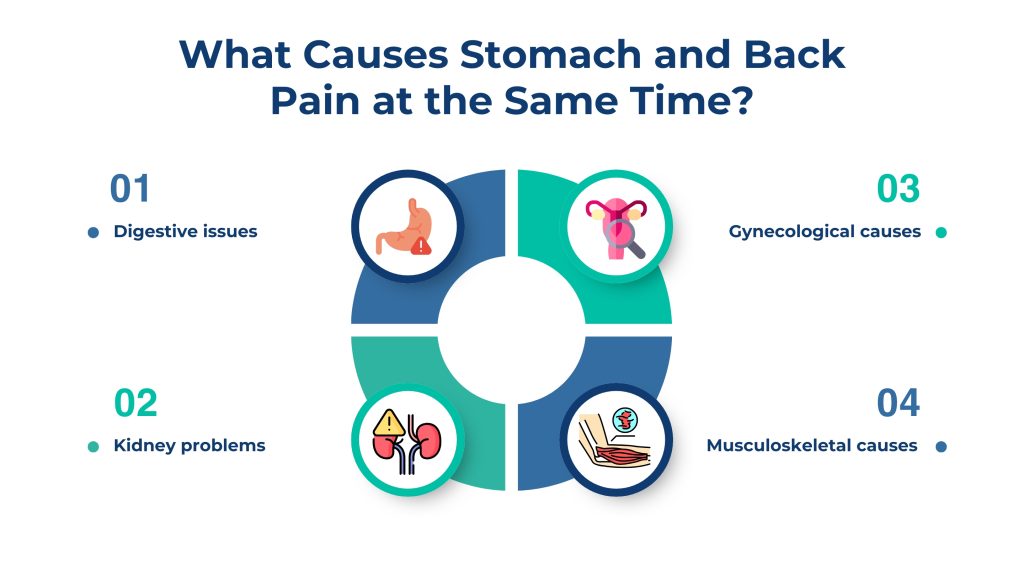
- Digestive issues: Acid reflux, ulcers, constipation, or food intolerances.
- Kidney problems: Infections or stones.
- Gynecological causes: Menstrual cramps, endometriosis, or ovarian cysts in women.
- Musculoskeletal causes: Strained abdominal or back muscles, poor posture, or herniated discs.
Because so many possibilities exist, it’s important to track patterns: when the pain starts, what worsens it, and what brings relief.
Stomach Ache and Back Ache at the Same Time
This phrase is one of the most common search queries — and for good reason. People often experience generalized discomfort in both areas without knowing the cause.
Mild, temporary causes:
- Overeating or eating too quickly
- Poor posture after meals
- Stress and anxiety tighten abdominal and back muscles
More serious causes:
- Ulcers that radiate pain backward
- Gallstones blocking bile flow
- Kidney infections cause pain in the abdomen
If the pain resolves within a few hours or with simple remedies, it’s usually nothing serious. Persistent or severe pain, however, deserves medical investigation.
Lower Stomach and Back Pain Together
When pain centers in the lower stomach and back, the urinary and reproductive systems often play a role.
Common causes include:
- Urinary tract infection (UTI): Burning urination plus lower abdominal and back discomfort.
- Kidney stones: Intense pain that comes in waves, often radiating from the lower back to the groin.
- Menstrual cramps: Many women feel cramps in both the lower stomach and lower back.
- Constipation: Pressure in the intestines can radiate backward.
- Ovarian cysts: Can cause sharp or dull pain in both regions.
When to seek urgent care:
- If the pain is sudden and severe.
- If there’s blood in urine or stool.
- If fever or nausea accompanies the pain.
Upper Back Pain and Stomach Pain: What It Means
When upper back pain and stomach pain occur together, it often points toward issues in the digestive organs located in the upper abdomen.
Potential causes include:
- Gallstones: Often cause pain in the upper right stomach that radiates to the back, especially after fatty meals.
- Stomach ulcers: Pain from ulcers may burn in the upper abdomen and spread to the back.
- Pancreatitis: A serious condition causing severe upper abdominal pain that goes straight through to the back.
- Gastritis: Inflammation of the stomach lining can irritate nerves and cause referred back pain.
If your pain is persistent, sharp, or occurs after meals, it’s important not to ignore it. Many digestive conditions worsen without treatment.
Back Pain When Stomach Is Empty
It may seem strange, but many people feel back pain when their stomach is empty. This often points to acid-related issues, such as:
- Gastritis: An inflamed stomach lining becomes irritated when empty.
- Peptic ulcers: Pain that improves after eating but worsens on an empty stomach.
- Acid buildup: Skipping meals can increase acidity, leading to both stomach and back discomfort.
Relief tips:
- Eat smaller, frequent meals instead of skipping.
- Avoid excessive caffeine and alcohol.
- Consult a doctor if the pain is severe or accompanied by weight loss.
Upper Right Side Back Pain in Females
For women, pain in the upper right side of the back often connects with abdominal or organ-related issues.
Possible causes:
- Gallbladder disease: Gallstones are more common in women, especially after pregnancy or in middle age.
- Liver problems: Liver inflammation can cause pain in the upper right abdomen and back.
- Musculoskeletal strain: Heavy lifting, posture issues, or even carrying children frequently.
- Kidney infections or stones: Pain may radiate upward into the back.
When to worry: If the pain comes with fever, nausea, or yellowing of the skin (jaundice), seek immediate medical attention.
Pain in Upper Left Side of Back in Females
Pain in the upper left back, paired with stomach discomfort, may have different triggers than right-sided pain.
Common causes include:
- Stomach ulcers: Especially those in the upper stomach region.
- Spleen issues: Enlargement or infection of the spleen can cause left-sided abdominal and back pain.
- Pancreatitis: Often radiates toward the upper left back.
- Muscle strain: Everyday activities like carrying bags, poor posture, or stress can tighten upper back muscles.
If left-sided back pain is persistent or severe, it’s best to rule out internal organ causes with a medical checkup.
When to Seek Medical Attention
It’s normal to feel occasional aches from gas, overeating, or muscle tension. But stomach and back pain together can sometimes signal emergencies.
Seek immediate medical care if you experience:
- Sudden, sharp, or severe abdominal and back pain
- Pain accompanied by fever, vomiting, or dehydration
- Blood in vomit, urine, or stool
- Yellowing of the eyes or skin (jaundice)
- Pain that does not improve with simple remedies
Never ignore persistent pain; early diagnosis can prevent serious complications.
Home Remedies and Lifestyle Tips
If your pain is mild and not linked to a serious condition, lifestyle changes can make a big difference.
Dietary changes:
- Avoid trigger foods (spicy, fatty, acidic, and fried foods).
- Eat smaller, frequent meals.
- Limit carbonated drinks that increase bloating.
Posture and movement:
- Sit upright after meals.
- Incorporate light walking to improve digestion.
- Practice stretches that relieve lower and upper back tension.
Stress management:
- Stress can worsen both digestive issues and back pain.
- Try yoga, meditation, or breathing exercises.
Hydration:
- Drink plenty of water to aid digestion and kidney health.
Summing Up
Stomach and back pain together is more common than many realize, and while it can be caused by simple issues like gas or indigestion, it can also signal more serious conditions like ulcers, gallstones, or kidney problems. Paying attention to your body’s signals, tracking when and how the pain occurs, and seeking medical help when needed can make all the difference.
Bottom line: Don’t ignore combined stomach and back pain. With the right diagnosis and care, you can find relief and protect your long-term health.
FAQs
Q: Why does my upper stomach hurt when I drink water?
Ans: Cold water, gastritis, or acid reflux may irritate the stomach lining, causing temporary discomfort.
Q: Why does my stomach and back hurt at the same time?
Ans: Shared nerves and referred pain mean that digestive or urinary issues can radiate into the back.
Q: Can back pain cause stomach pain?
Ans: While less common, spinal nerve compression or severe back strain can sometimes cause abdominal discomfort.
Q: Can bloating cause back pain?
Ans: Yes, trapped gas creates pressure in the stomach and intestines, which can radiate into the back muscles