Are you struggling with nagging pain on the side of your foot that just won’t go away? Whether it appears suddenly without injury, flares up after running, or lingers around your pinky toe, foot pain can quickly interfere with your daily life. The good news is that understanding where your pain occurs often reveals why it’s happening.
In this article, we’ll walk you through a detailed foot pain chart, explain common causes of side and outside foot pain, and share practical treatment options so you can find relief and get back on your feet with confidence.
Foot Anatomy Basics
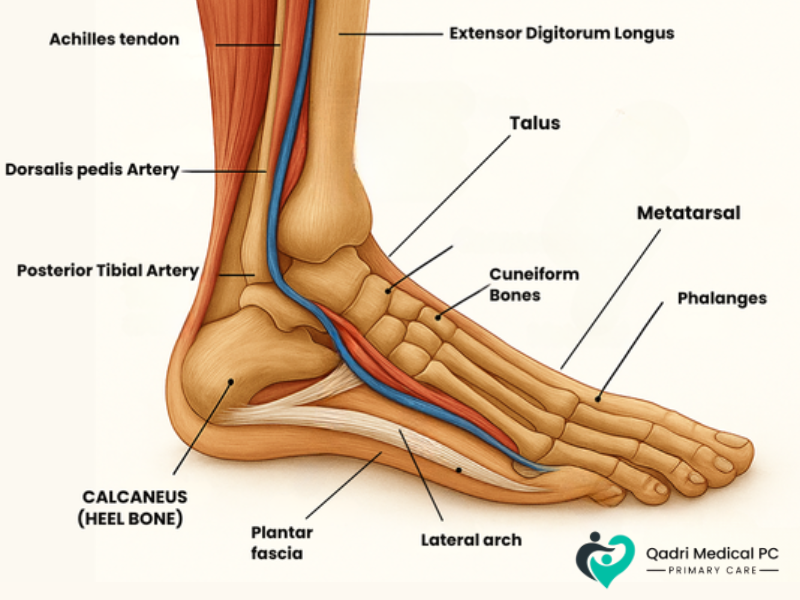
The human foot is a biomechanical masterpiece. Each step you take involves a complex interaction between 26 bones, 33 joints, and more than 100 muscles, tendons, and ligaments. Together, these structures support your body weight, absorb shock, and allow smooth movement.
When any of these components are strained, injured, or misaligned, pain can appear in different regions such as the heel, arch, top, or side of the foot. That’s why a foot pain chart is so helpful: it connects pain location with possible underlying causes.
Here’s a quick overview of the main regions to help you understand where side foot pain fits in:
- Heel (Calcaneus): absorbs body weight and is a common site of plantar fasciitis or heel spurs.
- Arch (Midfoot): maintained by ligaments and fascia; flatfoot and stress injuries often affect this area.
- Toes & Forefoot: critical for balance and push-off; prone to bunions, turf toe, or metatarsalgia.
- Inside (Medial) Side: often linked with bunions, flatfoot, or tibial tendon issues.
- Outside (Lateral) Side: where the peroneal tendons, cuboid bone, and 5th metatarsal are located, the most common area for side of foot pain.
Understanding this foundation makes it easier to interpret the foot pain chart and pinpoint why you might be experiencing pain on the side of your foot.
What Causes Pain on the Side of the Foot?
Pain on the side of your foot, whether sudden or gradual, can stem from a variety of sources. Some of the most common include:
- Overuse injuries: Running, jumping, or repetitive stress can inflame tendons and ligaments.
- Sudden trauma: Sprains, fractures, or rolling the ankle.
- Stress fractures: Tiny cracks in the bones, often from high-impact sports or weak bone density.
- Biomechanical issues: Flat feet, high arches, or improper footwear.
- Underlying medical conditions: Arthritis, gout, or nerve entrapments.
Outside Foot Pain: Conditions Explained
If you’re feeling discomfort along the lateral (outside) edge of your foot, it may relate to one of these common conditions:
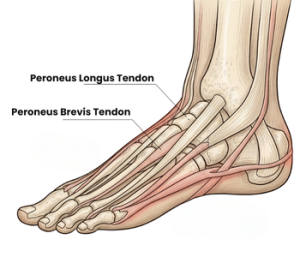
Peroneal Tendinopathy
- Where: Tendons along the outer ankle and foot.
- Symptoms: Swelling, soreness, and sometimes your foot feels wobbly.
- Trigger: After an ankle sprain or from overuse (like running or sports).
Cuboid Syndrome
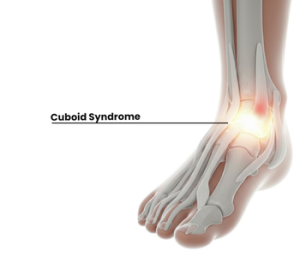
- Where: A small bone on the mid-outer side of the foot (the cuboid bone).
- Symptoms: Aching pain, worse when walking or pushing off the foot.
- Trigger: Bone gets slightly out of place or irritated,often in athletes and dancers.
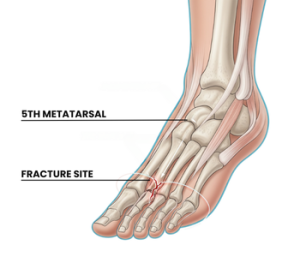
5th Metatarsal Fracture
- Where:The long bone just below your pinky toe.
- Symptoms: Sudden sharp pain, swelling, and trouble putting weight on the foot.
- Trigger: Twisting your foot, a fall, or a bad step.
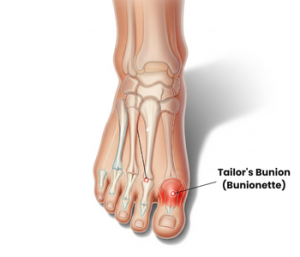
Tailor’s Bunion (Bunionette)
- Where: Base of the pinky toe.
- Symptoms: Pain, redness, and a small bony bump.
- Trigger:Tight or narrow shoes, or the natural shape of your foot.
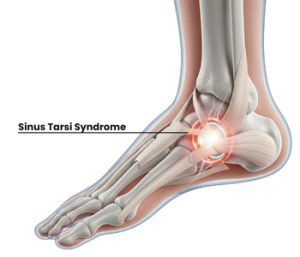
Sinus Tarsi Syndrome
- Where: Subtalar joint (just below the ankle).
- Symptoms: Chronic soreness after an ankle sprain.
- Trigger: Walking on uneven ground or old ankle injuries acting up again.
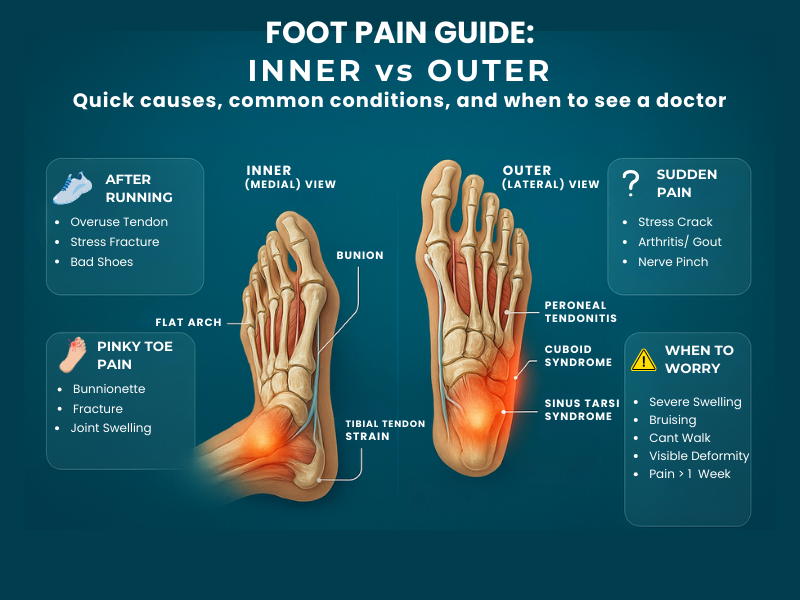
Inner Side vs. Outer Side Foot Pain Chart
It’s important to distinguish between inside foot pain (medial) and outside foot pain (lateral).
- Inner Side Foot Pain: Often linked with bunions, flatfoot deformities, or posterior tibial tendonitis.
- Outer Side Foot Pain: Commonly tied to peroneal tendonitis, cuboid syndrome, or a 5th metatarsal fracture.
A simple side of foot pain chart helps patients and clinicians quickly identify whether discomfort is due to structural issues, overuse, or acute injury.
Specific Side of Foot Pain
Side of Foot Pain After Running
Runners often experience this due to:
- Peroneal tendonitis from overuse.
- Stress fractures from repetitive impact.
- Improper footwear is causing misalignment.
Sudden Foot Pain Without Injury (Side of Foot)
Sometimes pain arises even without a clear accident. Causes include:
- Stress fractures from unnoticed repetitive stress.
- Gout or arthritis flare-ups affecting the foot joints.
- Nerve entrapments cause sharp pain.
Pinky Toe and Side of Foot Pain
This combination usually signals:
- Tailor’s bunion near the pinky toe.
- 5th metatarsal fractures or stress injuries.
- Capsulitis (joint inflammation).
Lateral Side of Foot Pain – When to Worry
Seek medical care if you notice:
- Severe swelling or bruising.
- Inability to walk or bear weight.
- Visible deformity.
- Persistent pain lasting more than a week despite rest.
Treatments and Relief for Side of Foot Pain
Once you’ve identified the possible cause of your pain using the foot pain chart, the next step is relief. Treatment depends on whether your pain is acute (sudden) or chronic (long-term).
Self-Care at Home
- R.I.C.E. method: Rest, Ice, Compression, Elevation for sprains and tendon injuries.
- Supportive footwear: Replace worn-out shoes and use orthotics for better foot alignment.
- Stretching & strengthening: Gentle calf stretches, peroneal strengthening, and arch-support exercises.
Medical Treatments
- Medication: Over-the-counter anti-inflammatories for swelling and pain.
- Physical therapy: Helps restore mobility and strength.
- Steroid injections: Sometimes used for chronic bursitis or severe tendonitis.
- Surgery: Required for fractures, severe bunions, or tarsal coalition that doesn’t improve with conservative treatment.
Never ignore side foot pain that makes it hard to walk; early treatment prevents long-term complications.
Prevention Tips
Foot pain often develops gradually, but you can take steps to keep your feet healthy:
- Choose supportive footwear: Wide-toe boxes and cushioned soles prevent pinky toe and bunion pain.
- Rotate shoes: Alternate between running shoes, walking shoes, and casual wear to reduce stress.
- Warm-up properly: Stretch calves, ankles, and toes before running or workouts.
- Strengthen foot muscles: Balance and resistance exercises reduce risk of peroneal tendonitis.
- Manage weight: Less stress on your feet means fewer overuse injuries.
Foot Pain Chart Summary
The foot pain chart is your quick reference to connect where you hurt with what might be causing it.
- Outside (Lateral) Foot Pain: Peroneal tendonitis, cuboid syndrome, 5th metatarsal fracture, tailor’s bunion.
- Inside (Medial) Foot Pain: Bunions, flatfoot deformity, posterior tibial tendonitis.
- Heel Pain: Plantar fasciitis, heel spurs, Achilles tendonitis.
- Top of Foot Pain: Extensor tendonitis, stress fractures, Lisfranc injury.
- Bottom Foot Pain: Metatarsalgia, Morton’s neuroma, plantar fasciitis.
Adding a side of a foot pain diagram makes it easier for readers to visualize their pain source.
When to See a Doctor
It’s important to know when foot pain needs professional evaluation. Seek medical help if you notice:
- Inability to walk or bear weight.
- Severe swelling, bruising, or deformity.
- Sharp pain that comes on suddenly.
- Persistent pain lasting longer than 1–2 weeks.
- Signs of infection (warmth, redness, fever).
Final Thoughts
Side of foot pain can sneak up on you, whether from a tough workout, poor footwear, or an underlying condition. The good news? With the help of a foot pain chart, you can better understand the cause and take the right steps toward recovery.
Remember, while mild cases may improve with rest and supportive shoes, persistent or severe pain deserves professional care. Don’t let foot pain keep you from moving freely. If you’re struggling with outside foot pain, pinky toe pain, or sudden foot pain without injury, consult a podiatrist and take the first step toward lasting relief.
FAQs
Q1: What does pain on the side of the foot mean?
Ans: It often points to peroneal tendonitis, cuboid syndrome, or a 5th metatarsal injury, but arthritis and nerve issues can also be causes.
Q2: Is outside foot pain serious?
Ans: It can be. While some cases are due to overuse, fractures or tendon tears require immediate medical care.
Q3: Why does the side of my foot hurt after running?
Ans: Likely from repetitive stress on tendons or bones, worn-out shoes, or poor running biomechanics.
Q4: Can sudden side foot pain happen without injury?
Ans: Yes, stress fractures, gout, or nerve entrapments can cause pain even without an obvious accident.
Q5: What’s the difference between pinky toe pain and side of foot pain?
Ans: Pinky toe pain often comes from bunionettes or small fractures, while broader lateral foot pain usually involves tendons or the cuboid bone.